

News: Microelectronics
10 November 2026
onsemi introduces EliteSiC M4 fourth-gen silicon carbide platform, with up to 30% higher power density and 35% lower losses
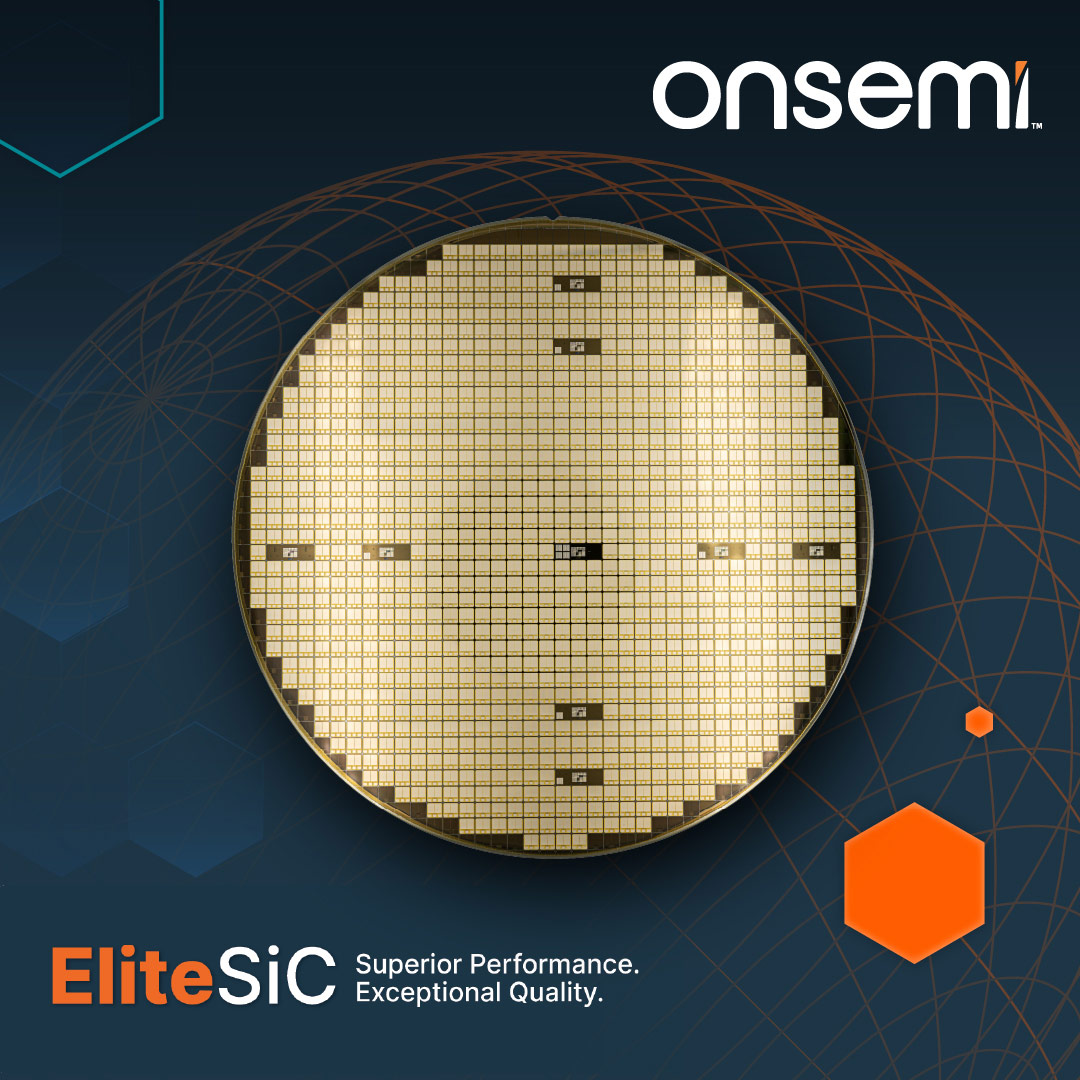
Intelligent power and sensing technology firm onsemi of Scottsdale, AZ, USA has introduced EliteSiC M4, its fourth-generation silicon carbide (SiC) platform built on a trench architecture and designed to set a new performance benchmark for next-generation power systems. With what is claimed to be industry-leading conduction and switching performance, EliteSiC M4 allows greater design freedom to increase power density and efficiency up to 30% and lower losses by 35%, enabling more efficient, power-dense systems across electric vehicles (EVs), AI data-center and industrial applications.
“Power requirements are rising faster than the physical infrastructure around them. The next generation of power systems will require the ability to deliver more power, more efficiently and in less space,” notes Achyut Shah, group president of the Power Solutions Group at onsemi. “With more than 16 billion miles of proven silicon carbide operation in vehicles around the world, EliteSiC M4 is combining that foundation of reliability with the performance customers need to re-think the balance among power, efficiency, size and cost.”
Delivering more power within real-world constraints
The growth of AI, electrification and energy infrastructure is creating a common challenge for power system designers – delivering significantly more power without proportional increases in size, energy losses, and cooling requirements. onsemi says that EliteSiC M4 addresses that challenge by expanding the power and efficiency available within existing system constraints, giving customers greater flexibility to scale AI infrastructure, electric vehicles and industrial systems.
Across its key markets, EliteSiC M4 is said to translate these technology advances into system-level benefits:
- AI data centers: scaling compute without scaling power infrastructure at the same rate. Higher-density power conversion helps data centers get more compute from every megawatt, maximizing capacity while reducing the supporting the infrastructure required per unit of compute.
- Electric vehicles: getting more performance from the electric drivetrain: more compact, efficient traction inverters can help automakers improve vehicle range.
- Energy infrastructure: making more of every unit of energy. More efficient, higher-density power conversion helps solar, energy storage and other high-voltage systems to reduce conversion losses.
“As vehicle power levels increase, traction-inverter design becomes a tighter balancing act between efficiency, thermal performance, power density and reliability,” notes Harald Hartel, vice president of the eMotor Controls business unit at Schaeffler AG. “Higher efficiency and power density can give us greater flexibility to optimize the traction inverter for range, thermal performance and packaging, which are increasingly important as electrified powertrains become more demanding.”
New architecture for higher power density and efficiency
EliteSiC M4 is said to improve conduction and switching performance without compromising reliability. Key improvements over the previous generation include:
- Improvement in specific on-resistance (RSP): reduces specific RSP by 20-50%, while enabling faster switching.
- Lower switching losses: improves switching figures of merit by 67% in hard-switching and 50% in soft-switching, supporting compact power-supply designs.
- Broad packaging flexibility: designed to support existing packages, including top-side-cooled surface-mount packages and high-power modules.
- Ruggedness for demanding applications: the platform is also designed for demanding operating environments, with qualification supporting temperatures of 185°C and above, enabling use in high-voltage automotive and space applications.
Availability
The EliteSiC M4 750V bare die for automotive traction inverters is available now. Additional product offerings for a range of voltages up to 1200V are expected to be available beginning in 2027.
onsemi launches EliteSiC M3e MOSFETs as its latest-generation silicon carbide technology platform