

News: Optoelectronics
26 March 2026
Micro-disk and micro-ring blue laser diodes
Researchers based in China claim record Q values up to 17,066 for III–nitride laser diodes based on micro-disk/micro-ring structures (Feifan Xu et al, Science Advances, v12(6) published online 6 February 2026).
The team from Nanjing University, Suzhou Institute of Nano-Tech and Nano-Bionics, Nanjing University of Posts and Telecommunications, and Xiamen University, see potential application to visible light communication (VLC) systems: “This kind of micro-laser source can be integrated by evanescent side-coupling to specific designed waveguides or directly butt-coupling at the edge of micro-lasers, highlighting their great potential for next-generation on-chip integrated photonics and VLC applications.”
Micro-disk/micro-ring laser structures use whispering gallery modes (WGMs) to achieve the gain needed for stimulated emission. WGMs are modeled on the acoustic properties of circular galleries that efficiently transmit sound. A common real-world reference for this is the whispering gallery in St. Paul’s cathedral, London, UK, studied by Lord Rayleigh in the late 1870s.
Apart from low-cost, large-bandwidth VLC, the researchers see potential for efficient pumping of down-conversion materials to green/red emission for full-color displays, or to excite fluorophores and tissue autofluorescence for biosensing.
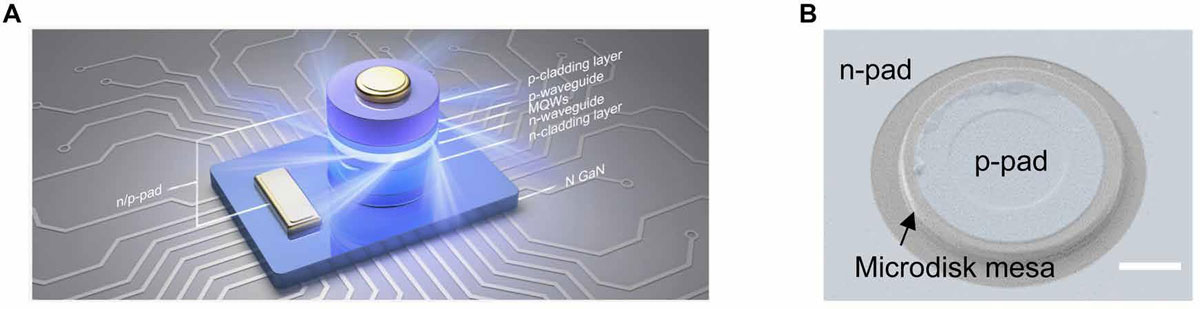
Figure 1: (A) Schematic of microdisk laser. (B) Scanning electron microscope (SEM) image of 40μm-diameter device — scale bar, 10μm.
The laser material (Figure 1) was grown on bulk gallium nitride (GaN) substrate by metal-organic chemical vapor deposition (MOCVD). The active region was an indium gallium nitride (InGaN/GaN) multiple quantum well (MQW) structure. The active region was placed in a waveguide of InGaN layers above and below the MQW. Optical confinement was provided by aluminium gallium nitride (AlGaN) cladding. Below the MQW the layers were doped n-type, and above them they were p-type.
The structure was capped with indium tin oxide (ITO) as a current-spreading layer on p-GaN deposited on the AlGaN cladding as a contact layer.
Commenting on simulations, the researchers report: “Compared to the bare laser structures, the presence of the optimized ITO layer could notably reduce absorption losses and enhance the optical field intensity within the waveguide region by ~43%. This higher optical field intensity enhances the Purcell effect, thereby lowering thresholds of electrically pumped micro-disk lasers.”
The Purcell effect refers to spontaneous emission enhancement within a resonant cavity due to a higher density of photon states in the emission region.
The micro-disk lasers were formed by plasma etching circular mesas, in a cyclic process to smooth the sidewalls. The mask consisted of nickel in contrast to the more conventional photoresist. Smooth sidewalls are critical for achieving WGM resonance.
“This optimized procedure could mitigate the thermal deformation of the mask and reduce sidewall etching damage from prolonged exposure to high-energy plasma,” the team explains.
Further smoothing/repairing of surface defects was achieved with a potassium hydroxide (KOH) wet etch.
A comparison of 40μm disk lasers with conventional and the enhanced mesa etching procedures showed a significant reduction in laser threshold current density from 5.53kA/cm2 to 2.32kA/cm2, respectively. The optimized device suffered a 21% drop in output power after 7200s of continuous wave (CW) operation at twice the threshold injection. The researchers tentatively attribute this to “defect-assisted non-radiative recombination at the unpassivated micro-disk sidewalls.”
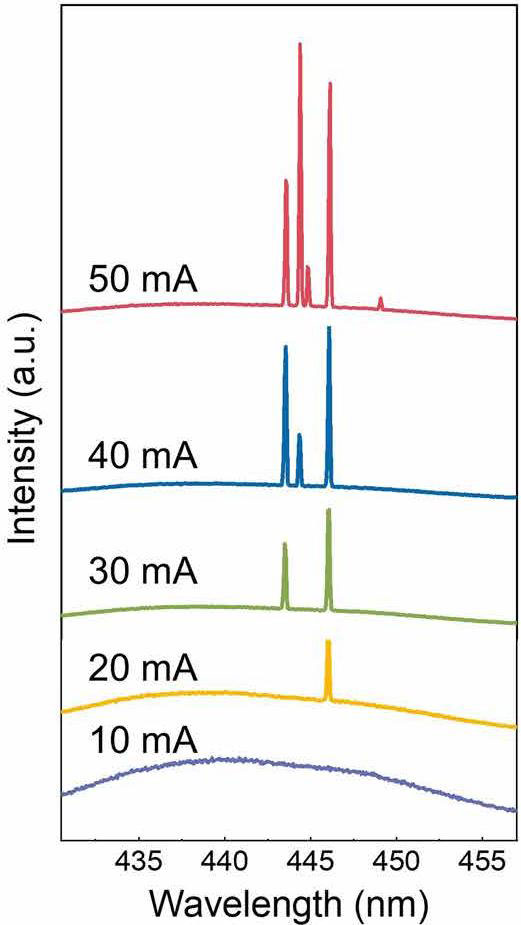
Figure 2: Emission spectra of 40μm micro-disk laser.
The wavelength of the initial laser emission was around 445nm (Figure 2). As the injection current increased, further modes were excited from other WGMs at slightly shorter wavelengths.
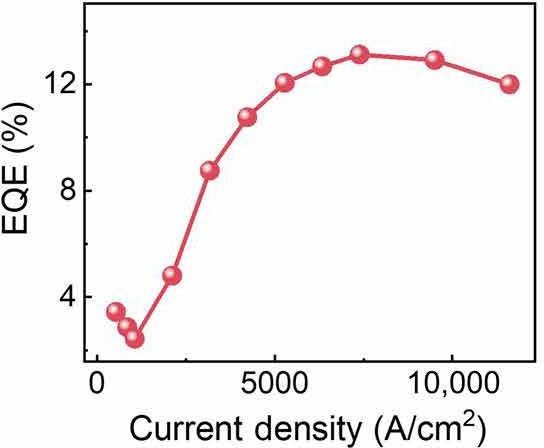
Figure 3: External quantum efficiency (EQE) versus current density, 40μm device.
The laser slope efficiency was around 0.41W/A. The external quantum efficiency reached 13% (Figure 3).
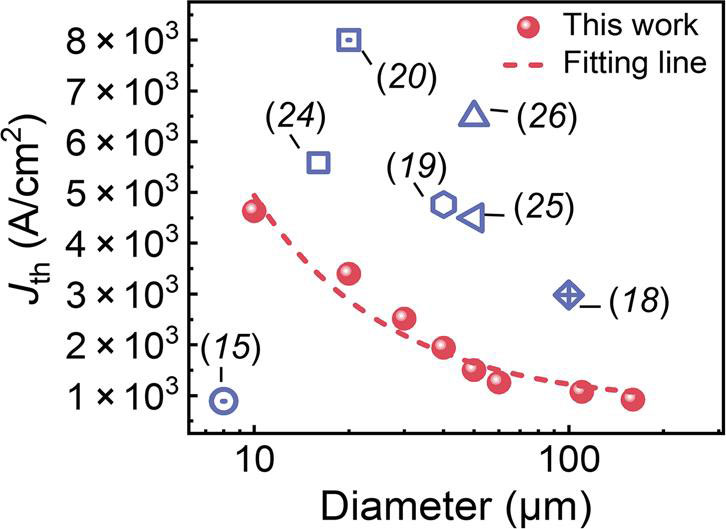
Figure 4: Threshold current density versus diameter for GaN-based micro-disk lasers in Feifan Xu et al’s work and other reports.
Further micro-disk lasers were fabricated with diameters between 10μm and 160μm. The diameter limits the achieved thresholds of 4.6kA/cm2 and 0.9kA/cm2, respectively (Figure 4).
A fit according to J2 + 4j1/D, where D is diameter, was used to separate the non-radiative recombination effects of bulk and sidewall recombination. The D-dependent term quantifies sidewall non-radiative recombination, relative to the bulk J2 term. The optimized mesa etching reduced the j1 term to 1.04A/cm, relative to 2.8A/cm for conventionally etched devices fabricated by the team.
The researchers comment: “Notably, this j1 value is markedly lower than that reported for GaAs QW-based WGM lasers (~4.5A/cm), indicating a weaker size dependence in GaN-based WGM lasers.”
The previous report labeled (15), in the bottom left corner of (Figure 4), was a mushroom-shaped device with an undercut etching, increasing the vertical optical confinement in the WGM region. The lower threshold of this device comes at the cost of more complex fabrication (higher cost for manufacturing) and the risk of cracking at the micro-disk edge (low yield). The researchers see mushroom devices as being “unsuitable for mass production or heterogeneous integration in practical applications”.
The researchers performed simulations to investigate how the larger-diameter devices perform with lower thresholds: “The micro-disk lasers with larger diameters exhibited lower sidewall overlap factors, indicating less coupling of the fundamental WGM to sidewall surface scattering and stronger resonance of the WGMs within the microdisks.”
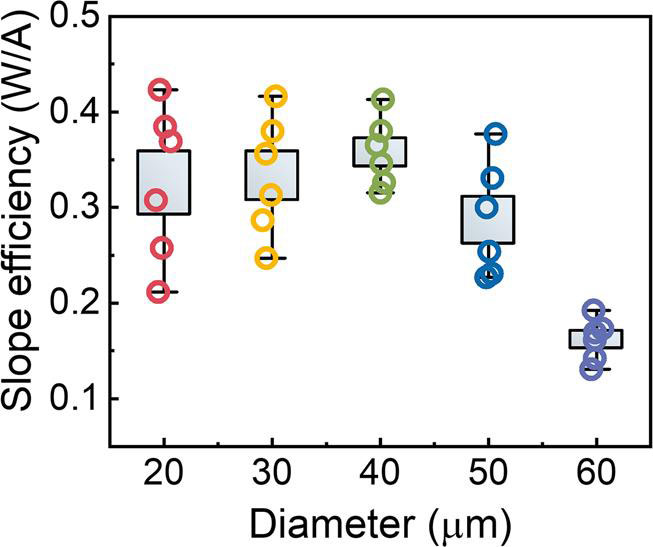
Figure 5: Slope efficiency versus device diameter.
However, the larger-diameter devices suffered a loss in slope efficiency (Figure 5) and wall-plug efficiency (Figure 6). The slope efficiency is impacted in devices larger than 40μm.
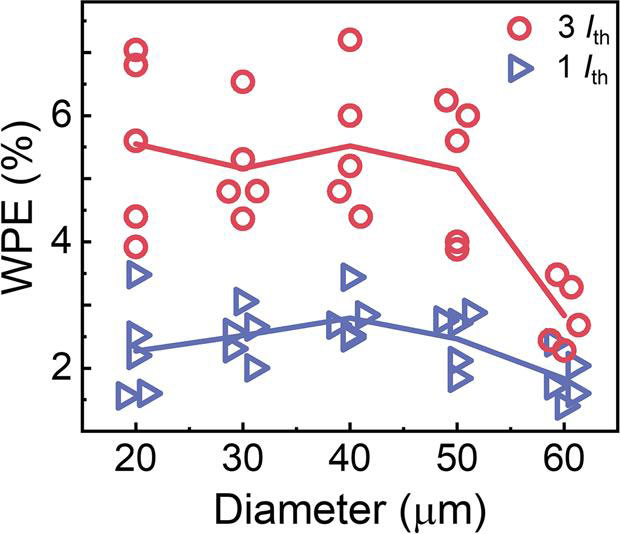
Figure 6: Wall-plug efficiency versus device diameter at 1x and 3x threshold.
The team explains: “An increase in diameter leads to a smaller sidewall overlap factor for micro-disk lasers, which signifies less coupling of the WGMs to sidewall scattering loss. Although this limited scattering loss benefits the lasing behavior, it also results in restricted light extraction of the WGMs, thereby diminishing the output power of the devices.”
The WPE reached as high as 7.2%, setting a benchmark for GaN-based micro-disk lasers. The researchers comment: “The observed dispersion in slope efficiency and WPE mainly arises from material inhomogeneity and diverse sidewall losses, which affect the performance consistency of micro-lasers and require further optimization.”
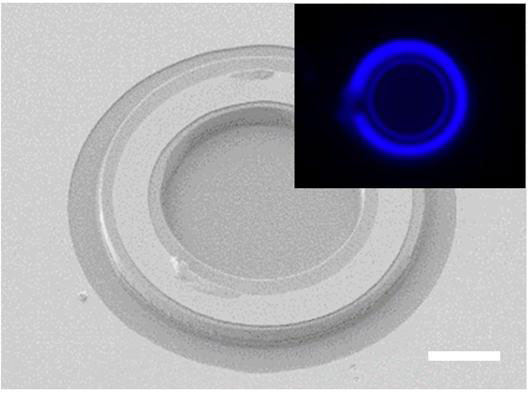
Figure 7: SEM image of micro-ring laser: outer diameter, 50μm; inner diameter, 30μm. Scale bar, 10μm. Inset: electroluminescence (EL) image.
With a view to single-mode emission, the researchers fabricated micro-ring lasers by etching an air hole in the devices (Figure 7), disrupting the high-order WGMs due to scattering on the inner sidewalls of the micro-ring. This leaves the fundamental mode to produce single-mode lasing. A 50μm micro-ring laser was single-mode up to 4x threshold injection, when a small peak emerged at a slightly longer wavelength.
At 2x threshold the peak was at 443.73nm with 26pm full width at half maximum (FWHM). The Q factor (f/Δf ~ λ/Δλ) was 17066, which is claimed to be 69% larger than the highest previous value for WGM devices. The team says that this significantly surpasses previous reports for electrically pumped GaN-based lasers (Figure 8). The researchers’ device also achieved this at lower threshold than the nearest comparisons.
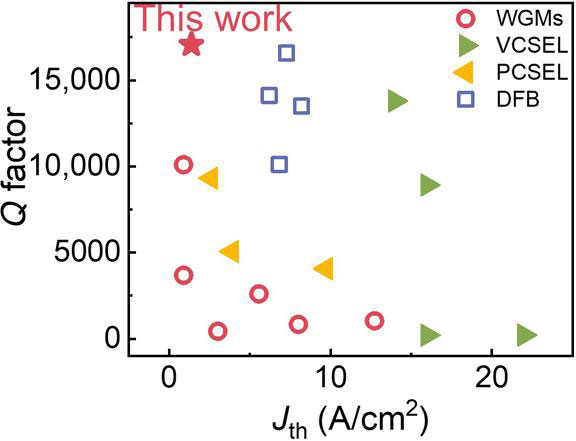
Figure 8: Q factor benchmark from micro-ring laser and previous reports of GaN-based WGM lasers, VCSELs, photonic crystal surface-emitting laser (PCSEL), and distributed-feedback (DFB) lasers.
The radiation was expected to be uniform for all in-plane angles, due to the rotational symmetry of the devices. This enabled a micro-disk/micro-ring laser broadcast setup (Figure 9) for visible light communication to photodiode (PD) receivers.
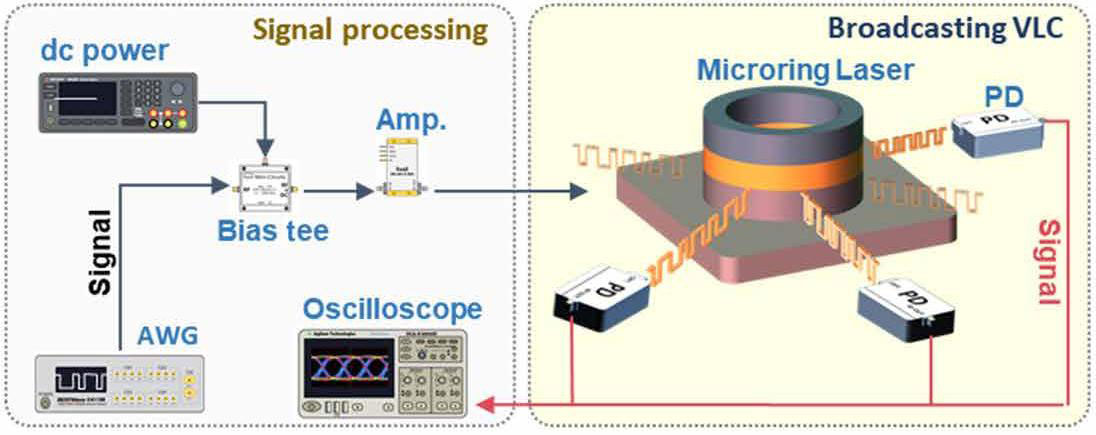
Figure 9: Schematic of real-time signal transmission system using single-mode micro-laser.
The −3db modulation bandwidth of a 50μm micro-ring laser (inner hole 30μm) achieved a 3.85GHz bandwidth at 70mA injection. Edge-emitting lasers (EELs) can achieve similar bandwidths at higher power (up to 160mW), but are highly directional, limiting their ability for broadcasting. Micro-LEDs have much lower output power (less than 5mW), and generally lower bandwidth. The output power of the multi-mode micro-disk lasers was in the range 24–32mW with bandwidths of 3–4.2GHz.
These performance metrics enabled non-return to zero (NRZ) 5 gigabits per second (5Gbps) data rates up to 2m. “These metrics meet the VLC targets for gigabit links and are compatible with current VLC standards,” the researchers comment. Coupling the radiation to optical fibers at efficiencies up to 29.6% enabled communication up to 6.25Gbps. The communication was limited at this stage by the detection bandwidth rather than that of the emitter.
III–nitride laser diodes GaN MOCVD
https://www.science.org/doi/10.1126/sciadv.aeb1682
The author Mike Cooke is a freelance technology journalist who has worked in the semiconductor and advanced technology sectors since 1997.