

News: Markets
3 June 2026
From road to rack: 800V EV innovations redefining AI data-center power architecture
For the past decade the electric vehicle industry has become the dominant application area for power electronics. For most power electronics players, the automotive industry has been their main source of revenue for years, and power electronics innovations have focused mainly on improving efficiency and performance across the e-powertrain.
However, throughout the past two years, power electronics tier-1s have gradually seen their automotive industry revenue stagnate amid reduced government incentives and increasingly steep competition with highly vertically integrated Chinese EV manufacturers. While IDTechEx still forecasts long-term growth in the EV market, many players are looking for alternative, growing application areas for power electronics.
Data centers, and especially AI data centers, represent a growing and rapidly innovating market, with an increased uptake of wide-bandgap semiconductors silicon carbide (SiC) and gallium nitride (GaN) to support increasingly powerful and power-hungry AI training models.
The power electronics market for data centers is expected to grow 2.5-fold by 2036, forecasts IDTechEx in the report ‘Power Electronics Market 2026-2036: Data Centers, Electric Vehicles, and Renewables’.
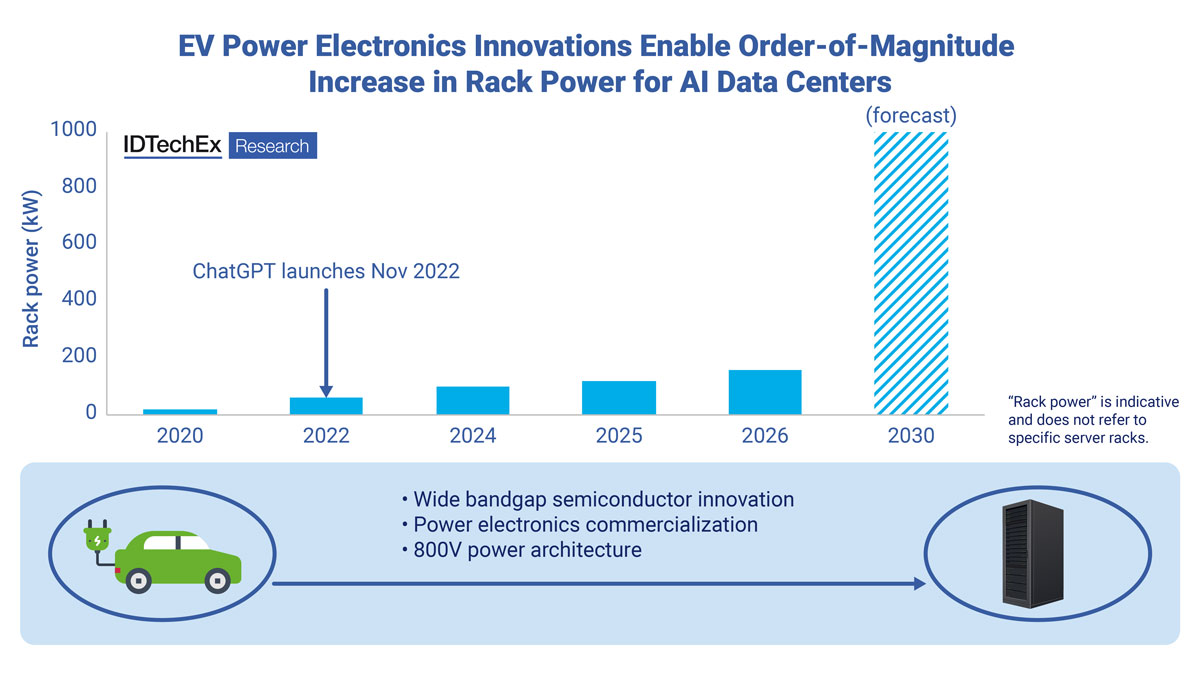
Picture: EV power electronics innovations enable order-of-magnitude increase in rack power for AI data centers.png
AI data-center per-rack power requirements are expected to increase over the next five years. To facilitate these changes, key EV power electronics innovations are being brought over to the data-center industry. Source: IDTechEx
A paradigm shift in data-center power architecture is coming over the next few years in the form of HVDC (800VDC) data centers, which will unlock an order-of-magnitude increase in rack power. This overhaul in data-center power architecture is directly influenced by 800V EV power electronics, from the materials used to high-voltage safety and protection mechanisms. In the report, IDTechEx tracks innovations across EV and data-center power electronics, drawing cross-application conclusions between EV and data-center power electronics.
AI data centers at a bottleneck and turning to EV power electronics for inspiration
Since the advent of ChatGPT in November 2022, AI has become increasingly mainstream, and leading AI software players, especially across the USA and China, have invested billions of US$ of capital into the development of more complex and powerful AI models. The GPU industry has evolved rapidly to accommodate more advanced training models. Each new generation of server requires more power to be delivered, and incumbent data-center rack architecture is simply not able to support the next generation of Nvidia’s ‘Vera Rubin Ultra’ servers.
Rack power levels have exploded from around 20kW pre-ChatGPT to 100kW today, with rack power expected to reach over 1MW by the end of the decade. With incumbent silicon power electronics and 480/54V data-center architecture, a 1MW rack would require the whole rack space to be dedicated to power conversion and would need over 200kg of copper. Data-center efficiency was and still is a key consideration in data-center design. Data-center power density, the amount of power processed per unit volume, will become an increasingly critical metric for AI data-center design.
In the report, IDTechEx tracks two key developments in data centers that will facilitate this change: wide-bandgap semiconductor adoption, and 800VDC data-center architecture. Both of these have been directly enabled by technological innovations in electric vehicles.
800V EV architecture, facilitated by WBGs, enables step-change in powertrain efficiency
The 800V EV architecture began to commercialize in 2019 with the Porsche Taycan, and has steadily been adopted across performance models and, increasingly, across budget models.
The two main drivers for the adoption of an 800V platform relate to increased charging speed and reduced cabling weight and I2R losses, improving overall EV efficiency.
The move to 800V has been underpinned by improvements and commercialization of wide-bandgap (WBG) semiconductors, particular SiC. At 800V, the efficiency improvements of SiC upon incumbent silicon IGBT and silicon MOSFET technology are significant and outweigh the cost premium of silicon carbide power semiconductors.
With electric vehicles occupying the majority revenue share of the power electronics market, power electronics innovation revolved around EVs and the e-powertrain, for both SiC and GaN technology. This has led to considerable commercialization and cost reduction for both wide-bandgap materials, as well as demonstration of their long-term reliability in harsh environments and their material superiority to silicon for high-voltage applications.
GaN innovations have been significant due to hype around its potential future adoption into EVs. However, GaN uptake into EVs has been slow, with the material more suited to low-voltage, high-frequency applications.
Wide-bandgap and HVDC innovations future-proof data centers for next-generation AI training and inference
Due to technological innovations and commercialization across the wide-bandgap semiconductor market, largely driven by electric vehicles, the adoption of wide-bandgap technology into data-center power electronics has been accelerated. Reference designs for 8kW and 12kW power supply units (PSUs) across leading power electronics players, such as Infineon and Navitas, feature SiC for high-voltage conversion stages and power factor correction (PFC), and GaN for low-voltage conversion stages.
With lower voltage conversion and the possibility for much faster (up to MHz) switching, the material benefits of GaN in data centers are highly desirable; GaN will likely enjoy faster uptake in data centers than in electric vehicles. Switching to WBG semiconductors in data centers leads to efficiency gains, but importantly also leads to significant increases in power density (with smaller SiC and GaN devices) and reduction in the size of passive components (such as capacitors and inductors).
In the same way that WBG semiconductors enabled the 800V shift in EV architecture, they will also facilitate the transition to 800VDC/HVDC AI data centers. With a precedent of 800V architecture, and development of the necessary safety evaluation and processes which can be modified from EV to data center, HVDC data-center architecture development can be accelerated by taking notes from existing EV power architectures. The transition to 800VDC is expected to simplify and future-proof data center architectures. With fewer power conversion stages and lower I2R losses, data-center efficiency will increase. Fewer points of failure reduce the chances of downtime. Most importantly, the 800VDC data-center architecture enables much higher power levels to be delivered to server racks, supporting future GPU generations and AI training models.
Power electronics market to grow at 10% CAGR to over $65bn by 2036